Closing 2026: Magnesia Supply and Demand Snapshot
- Share
- publisher
- HOLY Magnesium Industry
- Issue Time
- Dec 30,2026
Summary
Year-end magnesia snapshot: H2 2026 output, grade availability, stocks and regional demand.
Closing 2026: Magnesia Supply and Demand Snapshot
As 2026 closes, the magnesia market buyers meet today is not the one they priced in January. Caustic calcined magnesite (CCM), dead burned magnesia (DBM) and fused magnesia (FM) all moved through a second half shaped by steady refractory offtake, tighter energy and environmental discipline at the Liaoning origin, and freight that never settled into a predictable pattern. This snapshot records what the market actually did in H2 2026 - output, grade availability, inventory, regional demand and the numbers buyers quoted - so that Q1 2027 discussions start from a common baseline.
It is deliberately narrow in scope. This is not a shipping schedule, not a contract-versus-spot framework and not a customs guide; those are separate conversations. Here the focus is the physical market: how much material was made, which grades were long or short, where stock sat, and which regions pulled hardest. All tonnage, MgO and price figures below are representative of the H2 2026 trade range rather than a single lot, and land on an FOB Dalian basis unless a region is named.
H2 2026 Production Output in Liaoning
Dashiqiao and the wider Liaoning magnesite belt remained the swing supplier for the calcined and dead-burned grades. Through H2 2026, shaft kiln CCM campaigns ran at roughly 700-1000 C, DBM sintering above 1500 C, and FM electric arc fusion above 2700 C, with the fused campaigns scheduled in discrete blocks because cooling, crushing and sorting add weeks to a cycle. Industry participants put regional CCM-equivalent output in a broad band of tens of thousands of tonnes per month, with DBM and FM each a smaller share. The binding constraint was rarely nameplate capacity; it was ore blending, energy cost and environmental windows, which is why two plants with similar kilns could report very different monthly tonnes.
The most visible operational change was a shift toward campaign discipline over peak throughput. Producers that blended ore to a stable target before calcination held tighter MgO and CaO/SiO2 figures lot to lot, and that consistency became a selling point in its own right. For buyers, the practical consequence was that a committed tonnage placed against a scheduled campaign shipped more predictably than a spot enquiry dropped into a gap. FM remained the least flexible grade: fusion is power-hungry, on the order of a few thousand kilowatt-hours per tonne, so tariff changes and planned furnace maintenance showed up in availability faster than they did for sintered material.
Grade Availability Across CCM, DBM and FM
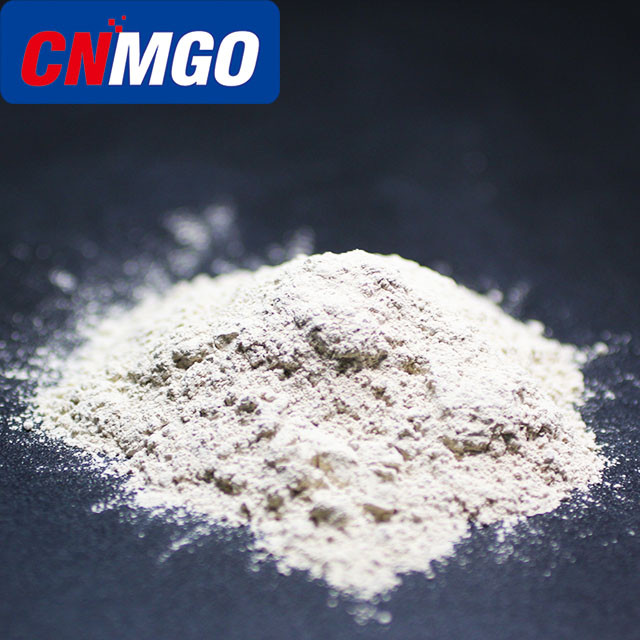
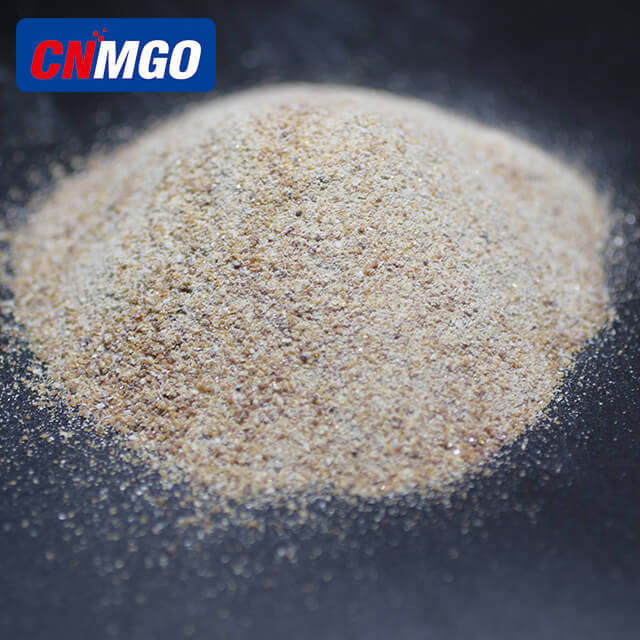
Availability split by grade rather than by headline MgO. Standard industrial CCM at MgO 85-92 percent and agricultural light burned magnesia at MgO 65-80 percent were the easiest to source, commonly offered from running stock in 200 mesh powder or 0-1 mm and 0-3 mm granular sizes. High-purity CCM at MgO 94-98 percent needed a cleaner ore blend and tighter kiln control, so it carried a longer lead and a firmer price. On the refractory side, DBM powder at 325 mesh, granular at 0-4 mm, and lump at 3-5 mm and 5-15 mm were the workhorse fractions and generally available, while specific narrow cuts and very low-iron lots required mill or screening time to be booked.

Fused magnesia was the tightest part of the range. Standard FM powder and FM granular around MgO 95-97 percent shipped against planned campaigns, but large-crystal, high-purity FM at MgO 97-99 percent for slag lines and magnesia-carbon brick was produced in smaller quantities and allocated to qualified programmes first. Coarse fused fractions and high-purity fused fines were consistently the longest-lead items in the book. Magnesium sulphate monohydrate (kieserite) at 20, 23 or 25 percent water-soluble MgO minimum stayed a separate, more availability-stable line, with demand driven by fertiliser, feed and magnesium oxy-sulphate cement rather than by refractory cycles.
Inventory Levels: Plant, Port and Buyer Stocks
Inventory sat in three layers, and they did not move together. Plant-held stock of standard CCM and DBM fractions was healthy through most of H2, enough to cover a routine 25 kg or 50 kg bagged order or a 1000 kg jumbo lot from running inventory. Port-side and in-transit stock was thinner and more volatile, because it depended on vessel space rather than on kiln output. Buyer-side stock was the layer that changed most: several large refractory consumers ran down the safety inventories they had built in 2025 and entered Q4 with leaner coverage, which made them more sensitive to any fused campaign slipping a week.
The net effect was a market that felt simultaneously well supplied and tight depending on the grade. A buyer of standard industrial CCM could call three suppliers and ship in days. A buyer needing a specific high-purity FM sizing saw a market sold forward against campaigns, with little free tonnage sitting in a warehouse. That split is the single most useful fact to carry into 2027: inventory comfort is grade-specific, not market-wide. Loss on ignition and moisture control also mattered more at year-end, since stock held through a humid season needs re-testing before a refractory or dosing plant accepts it.
What Buyers Actually Saw in H2 2026
From the buying side, H2 2026 was a story of modest price drift rather than a spike. CCM and DBM quotations moved within a relatively narrow band, tracking ore, fuel and currency, while FM responded more sharply to power tariffs and furnace scheduling. Lead times for sintered grades were commonly quoted in the three-to-five-week range including milling and packing, with fused campaigns longer and less negotiable. Buyers who qualified two or three grade options - a 90 percent MgO CCM alongside a 94 percent alternative, or a DBM fraction that could be substituted - absorbed the drift far better than those locked to a single specification.
Enquiry patterns changed too. More requests arrived with a full specification attached: MgO, CaO, SiO2, Fe2O3, Al2O3, loss on ignition, sieve analysis and, for reactive grades, citric acid activity. More asked for lot-level COAs and retained samples. That is a market maturing on documentation, and it shifted the conversation from price per tonne to whether a supplier can hold an analysis across a whole year. Freight added a second layer of uncertainty: a landed cost quoted in July could look materially different in November with no change at all in the ex-works number, purely on the ocean leg.
Regional Demand: India, Southeast Asia and Europe
India was the strongest volume pull in H2. Steel expansion kept refractory demand firm for DBM 325 mesh, 0-4 mm granular and 3-5 mm / 5-15 mm lump, while agricultural and feed channels absorbed CCM at MgO 65-80 percent and kieserite for compound fertiliser and premix. Indian buyers were notably specification-led and price-conscious, often qualifying multiple sources and watching landed cost closely. Southeast Asia - Vietnam, Indonesia, Thailand and Malaysia - showed steadier, more diversified demand: construction-driven magnesium oxy-sulphate cement and board production pulled reactive CCM, aquaculture and agriculture took magnesium sulphate, and a growing local steel base added DBM offtake. Transit there is short, roughly 10-18 days from Dalian, so buyers tended to order smaller, more frequent lots rather than hold large stock.
Europe was the most documentation-heavy and the most campaign-driven. Refractory makers in Germany, Italy and Spain bought DBM and FM on lining campaign cycles rather than monthly consumption, with high-purity fused grain reserved for slag lines and magnesia-carbon brick where slag penetration sets campaign life. European buyers asked hardest about CaO/SiO2 ratio, bulk density, ISO scope covering actual manufacture, lot traceability and heavy-metal screening, and they planned around longer 30-40 day transits with correspondingly larger safety stock. The Middle East and selected South American lanes provided steady baseline offtake, but the three regions above set the tone for H2 allocation.
Freight and FOB Dalian Pricing Through Year-End
On an FOB Dalian basis, the year-end picture was one of grade-tiered pricing rather than a single market number. Agricultural and industrial CCM sat at the low end, high-purity CCM and standard DBM in the middle, and high-purity FM at a visible premium that reflected fusion energy and crystal quality. Freight was the volatile component: a 20 ft container of bagged or jumbo mineral powder carries roughly 20-25 tonnes, so a shift of a few hundred US dollars in the ocean rate changes the landed cost per tonne by a double-digit figure. Lanes to Southeast Asia stayed comparatively cheap, North Europe and the Mediterranean carried the longest transit and the highest rate, and East Coast South America the longest lead of all at 35-45 days.
For buyers reading quotes, the useful discipline is to separate three numbers: the ex-works or FOB material price, the ocean and destination charges, and the currency and payment-term effect. In H2 2026 the material price was the most stable of the three and the freight leg the least, which is why a December landed-cost comparison against a July one can be misleading unless the freight basis is stated. None of this is a recommendation on when to ship or how to contract; it is simply the pricing backdrop buyers reported working with as the year closed.

HOLY Perspective
HOLY (CNMGO Group Limited) manufactures CCM, DBM, FM and magnesium sulphate at Dashiqiao in Liaoning and exports from Dalian to more than 50 countries, so we see this supply and demand picture from the production side as well as from the order book. Our read of H2 2026 is that the market was adequately supplied in standard grades, tight in high-purity fused material, and increasingly demanding on documentation - and that the buyers who fared best were those who qualified a grade alternative and kept a realistic safety stock of their critical fraction. If you want a grade-by-grade availability view for Q1 2027, send our team your MgO target, mesh or sizing, monthly tonnage and destination and we will map it against current campaigns.