Preventing Caking and Moisture in MgO Shipments
- Share
- publisher
- HOLY Magnesium Industry
- Issue Time
- Nov 25,2026
Summary
MgO is hygroscopic. Learn where moisture enters the chain and how to stop caking in transit.
Preventing Caking and Moisture in MgO Shipments
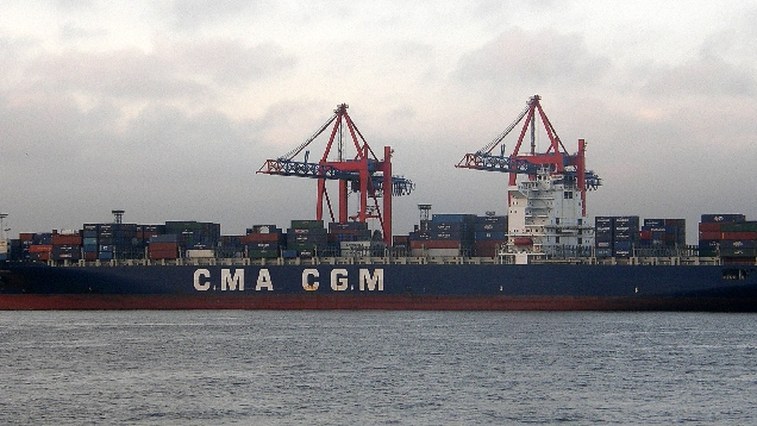
Few things damage a magnesium oxide shipment as quietly as moisture. The material can leave the plant perfectly free-flowing and arrive as a container of hard lumps that will not discharge from a big bag or feed through a screw conveyor. Because MgO is hygroscopic and chemically reactive with water, caking is not merely a nuisance - it is evidence that part of the product has converted. Understanding where water gets in, and specifying packing and handling to keep it out, is one of the highest-return activities in magnesia procurement.
Why Magnesium Oxide Picks Up Water
Magnesium oxide hydrates to magnesium hydroxide: MgO plus water gives Mg(OH)2. That reaction adds roughly 45 percent to the mass of the reacting fraction and roughly doubles its solid volume, because brucite occupies far more space than the oxide it replaces. The expansion is what welds particles together into cakes. Over longer exposure, magnesium hydroxide then carbonates with atmospheric CO2 toward magnesium carbonate, adding more weight and further hardening the mass. Both reactions show up as an increase in loss on ignition, which is why LOI is the simplest diagnostic.
Where Moisture Enters the Chain
In practice there are six usual suspects. Ambient humidity during bagging in a coastal or tropical plant. Rain during the inland haul or while containers are staged outdoors. A wet or poorly dried container floor, or dunnage and pallets stored outside. Container rain - condensation forming on the underside of the roof when a container moves from a warm, humid day to a cool night at sea, then dripping onto the top bags. Damage to bags or liners during stuffing and stripping. Finally, unloading in the rain at destination, often the least controlled step of the whole journey.
Packing Specification That Actually Works
Start with the bag. Woven polypropylene with an inner polyethylene liner - 60 to 100 microns is a normal range - is the standard for bagged MgO, and the liner should be properly closed, not merely folded. Palletised 25 kg and 50 kg bags should be stretch-wrapped or hooded so that the pallet behaves as a single moisture-managed unit. For jumbo bags, specify an inner PE liner and a coated outer fabric, and confirm the discharge spout is sealed. Then add desiccant: for a 20 ft container carrying hygroscopic mineral powder, several kilograms of container desiccant distributed through the load, plus desiccant blankets or kraft paper near the roof, is cheap insurance against container rain.
Container, Warehouse and Handling Practice
Packing only works if the box and the warehouse cooperate. Request a container condition check before stuffing - dry, clean, no holes, no chemical residue - and refuse wet floors. Stuff under cover, never in rain. At destination, store pallets off concrete on dunnage, keep them away from exterior walls, and hold warehouse relative humidity as low as is economic; below about 60 percent is a reasonable target for reactive grades. Rotate stock first-in-first-out, and reseal or use up opened bags quickly, since a part-empty bag left open overnight will harden. Ventilating a warehouse helps only if the incoming air is drier than the air inside; in a humid coastal season, dehumidification or sealed storage beats ventilation.
Testing for Hydration on Arrival
Do not judge a shipment by eye alone. Take a composite sample from several bags or several points in the bulk lot, then check loss on ignition at around 950-1000 C and compare it against the dispatch COA and against a retained sample. Typical fresh CCM might show single-digit LOI; DBM should be well under one percent. A materially higher figure means hydration. Free moisture at 105 C tells you how much of the problem is physically held water rather than chemically bound, and a sieve test quantifies lumps. Where the claim is significant, X-ray diffraction will identify brucite directly and settle the argument. Agree the sampling plan with the supplier before shipment so both sides accept the result.
What to Do With Caked Material
Remediation depends on how far the reaction went. Lightly compacted material breaks down under mechanical action - a slow-speed crusher, a lump breaker or simply careful handling - and can be screened back to specification, accepting that the recovered fines distribution may differ. Material with genuinely elevated LOI is a different matter: the magnesium is still there, but reactivity has fallen, so a wastewater dosing plant may need a higher feed rate to reach the same pH, and a refractory or cement formulation may not behave as designed. Never add water to loosen it. Document everything, photograph the bags before unloading, and open the claim while the window is open.

HOLY Perspective
HOLY (CNMGO Group Limited) packs CCM, DBM, FM and magnesium sulphate for moisture protection on long sea voyages from Dalian, exporting to more than 50 countries, and supplies lot-referenced COAs with LOI included so that arrival testing has a baseline to compare against. Our recommendation to buyers is simple: specify liner thickness, wrapping and desiccant in the purchase order rather than assuming them, and set an agreed LOI acceptance limit. Share your route and discharge conditions with our team and we will propose a packing specification that matches them.