Sourcing Refractories for India's Steel Industry
- Share
- publisher
- HOLY Magnesium Industry
- Issue Time
- Sep 23,2026
Summary
How Indian steel plants should specify DBM and FM: MgO, CaO-SiO2 ratio, density and sizing.

Sourcing Refractories for India's Steel Industry
India is now one of the largest and fastest-growing steel markets in the world, and refractory consumption follows crude steel output almost linearly. For procurement teams at integrated plants, secondary metallurgy shops and refractory converters, the practical question is not whether to buy magnesia, but which magnesia specification will survive a given vessel campaign. Dead burned magnesia (DBM) and fused magnesia (FM) sit at the centre of that decision, and the difference between a well-specified purchase and a cheap one is measured in lining campaigns per year.
Where Magnesia Is Consumed in a Steel Plant
Magnesia-based refractories are used wherever the environment is basic and hot. Basic oxygen furnace linings and gunning mixes, electric arc furnace hearths and sidewalls, ladle walls and bottoms, tundish working linings, and the magnesia-carbon bricks used at slag lines all depend on MgO quality. Each of these positions has a different dominant failure mechanism: slag corrosion at the slag line, thermal spalling on the sidewall, and abrasion plus penetration at the hearth. Sourcing that ignores the mechanism and buys one generic grade will always underperform.
Specifying DBM: The Four Numbers That Matter
For dead burned magnesia, four specification items predict performance better than any other. First, MgO content, typically 90 to 97 percent for refractory grades. Second, the CaO to SiO2 ratio, which determines which low-melting silicate phases form at grain boundaries; a ratio near or above 2 favours high-melting dicalcium silicate, while a lower ratio risks forsterite and monticellite phases that soften below 1500 C. Third, bulk density, which reflects how completely the magnesite was sintered; higher bulk density means lower porosity and slower slag infiltration. Fourth, grain size distribution, which controls packing density and therefore the porosity of the finished brick or monolithic mix.
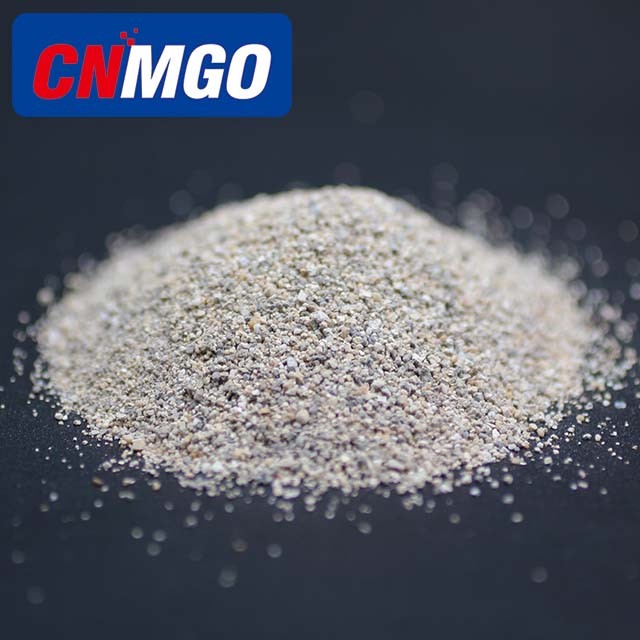
DBM granular, 0 to 4 mm, the standard aggregate fraction for refractory mixes.
Grain Fractions and How They Are Used
Refractory formulations are built from a graded mix: coarse fractions form the skeleton, medium fractions fill the voids, and fines react and bond during firing. DBM is therefore offered as sized lump, as granular material and as milled powder. Coarse lump in the 3 to 5 mm and 5 to 15 mm range works as aggregate in bricks and dry vibratable mixes. Granular material at 0 to 4 mm covers the intermediate fractions. Fine powder, commonly 325 mesh, is the reactive component that bonds the structure. Buyers should order the full set of fractions against a single lot to keep chemistry consistent across the batch.
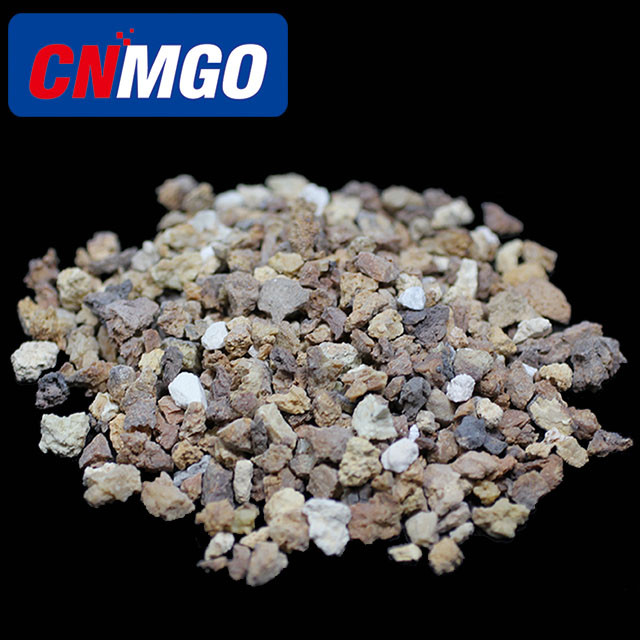
Sized DBM lump, 3 to 5 mm and 5 to 15 mm, used as refractory aggregate.
When Fused Magnesia Is Worth the Premium
Fused magnesia is produced by melting magnesia in an electric arc furnace and allowing it to crystallise, giving large periclase crystals, very high purity and high bulk density. It costs more per tonne than DBM but pays for itself where corrosion is severe: slag line bricks, EAF hot spots and high-value monolithics. For less severe positions, a well-specified DBM with a good CaO to SiO2 ratio gives a better cost per campaign. The sensible approach is to split the order, placing FM at the worst-corrosion positions and DBM elsewhere, rather than buying one grade for the entire vessel.
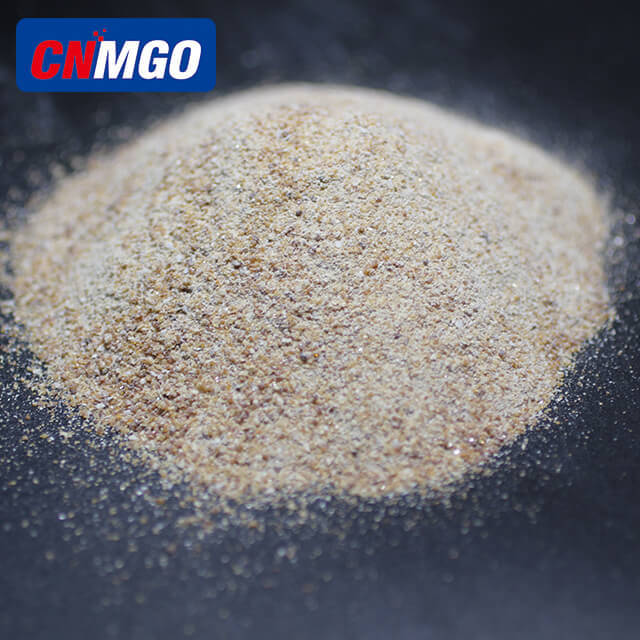
Fused magnesia powder, MgO 95 to 99 percent, for severe corrosion zones.
Logistics and Documentation for Indian Importers
Indian buyers importing from China should plan the full landed-cost chain: FOB Dalian pricing, ocean freight, Indian port handling, inland movement to the plant, and duty. Just as important is documentation. Insist on a lot-specific Certificate of Analysis showing MgO, SiO2, CaO, Fe2O3, Al2O3, loss on ignition and bulk density, plus sieve analysis per fraction. Agree a sampling plan and consider third-party inspection at loading. Refractory failure investigations are far easier when you can trace a lining back to a specific analysed lot.
Qualifying a Supplier Before the First Shipment
Before committing volume, run a structured qualification. Request a Certificate of Analysis from three recent lots rather than one, so you can see whether the numbers are stable or drifting. Order a trial quantity, have it independently analysed against the supplier's COA, and if possible run a small brick or castable trial in your own facility. Confirm the producer's actual capacity and kiln type, since a trader and a manufacturer offer very different security of supply. Finally, agree the commercial framework in writing: Incoterm, payment terms, packing specification, lead time and a clear claim procedure for off-specification material. None of this is expensive, and it prevents the costly pattern of discovering a specification problem only after a failed campaign.
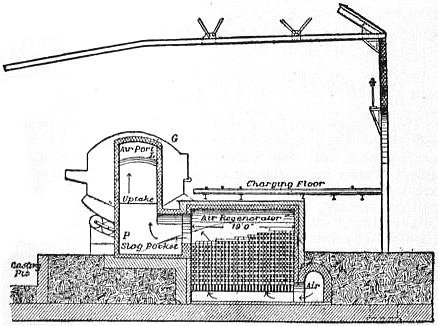
HOLY Perspective
HOLY (CNMGO Group Limited) manufactures DBM and fused magnesia at Dashiqiao in Liaoning and exports to more than 50 countries, including a long-standing refractory trade with India. Send us the vessel position, campaign target and slag chemistry and we will recommend a matched set of grain fractions with full lot documentation.