Magnesium Sulphate Solubility in Cool Irrigation Water
- Share
- publisher
- HOLY Magnesium Industry
- Issue Time
- Jan 30,2026
Summary
Dissolving magnesium sulphate in cool water: solubility, grade, dosing and emitter safety.
Magnesium Sulphate Solubility in Cool Irrigation Water
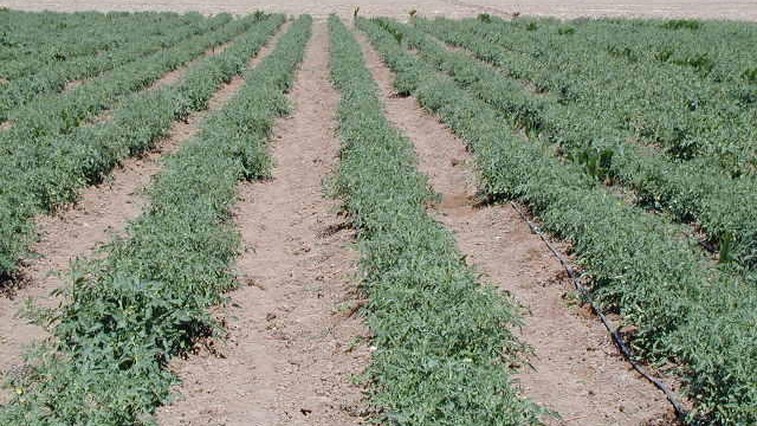
Early-season fertigation starts with cold water. In late winter and early spring, irrigation lines, reservoirs and stock tanks often sit between 4 and 12 C, and that is exactly when magnesium sulphate is asked to do its most important work: correcting magnesium deficiency before canopy demand peaks. The problem is that magnesium sulphate dissolves more slowly and to a lower saturation limit the colder the water, so a dose that vanishes into a summer tank can leave a layer of undissolved kieserite on the bottom of a spring one, and those fines are what later block filters and drip emitters. This guide covers the solubility behaviour of kieserite monohydrate and heptahydrate in cool water, how to build a clean stock solution, the dosing order that avoids precipitation with hard water, and the grade specs that tell you how much magnesium and sulphur you are actually applying.
Solubility Versus Water Temperature
Solubility is the maximum amount that will dissolve at equilibrium; dissolution rate is how fast you get there, and cold water hurts both. For magnesium sulphate heptahydrate, solubility climbs from roughly 20 to 25 grams per 100 grams of water near freezing to about 35 to 40 grams per 100 grams at 20 C, so a winter tank holds considerably less in solution than the same tank in summer. Kieserite, the monohydrate form, does not simply dissolve to the same equilibrium instantly: it must first hydrate at the particle surface, which is a slower step, and in cold water that step becomes the bottleneck. The practical consequence is that a stock solution mixed to summer strength will be supersaturated or gritty at 5 C. As a rule of thumb, drop the target concentration by a third to a half when water is below 10 C, or warm a portion of the water used for the stock tank. Never assume that because heptahydrate dissolves fast, a monohydrate powder will behave the same way in the same tank.
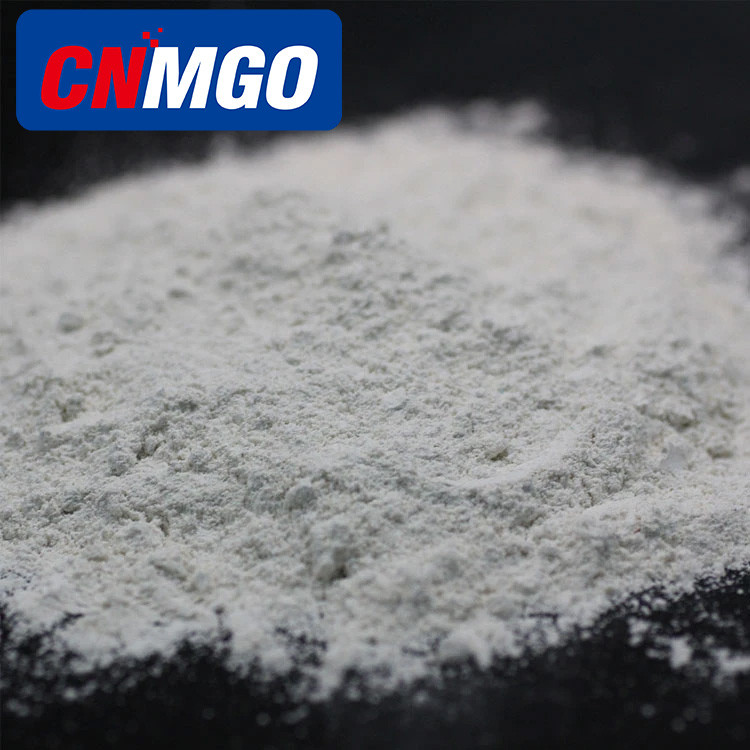
Magnesium sulphate monohydrate (kieserite) powder, water-soluble MgO 20, 23 and 25 percent minimum.
Powder Versus Granular: Dissolution Rate
Physical form controls dissolution rate as much as chemistry. A fine kieserite powder, with a high specific surface area, wets and disperses quickly and is the right choice for a stock solution that must be ready within minutes, but it is dusty, prone to floating on the surface if added too fast, and can form lumps if it is dumped in a single pile. Granular kieserite flows cleanly and dusts less, which suits direct soil application, but in a cool stock tank the coarse grains can take several hours and vigorous agitation to disappear, and any grain that survives will settle as a residue. For a cool-water fertigation system, powder is usually the safer input provided it is dosed gradually under active mixing. Whatever the form, pre-wet the product into a slurry in a small volume of water before topping up the tank; this stops hydrophobic clumps and gives each particle a wetted surface from the start.
Dosing Sequence, Agitation and Stock Solution Preparation
Build the stock solution in a repeatable order. Start the tank with clean water at roughly half the final volume and get the agitator or recirculation pump running before any solid is added. Add magnesium sulphate slowly, in a thin stream or through an eductor, so it disperses rather than heaps on the floor. Let it mix for a defined time, commonly 20 to 30 minutes in cool water, then make up to volume and keep circulating. A good working target for cool-water kieserite stock is a 5 to 10 percent w/v solution; pushing toward 20 percent in near-freezing water invites undissolved residue. If the programme also needs calcium nitrate, potassium salts or phosphates, use separate stock tanks and inject them on different lines, because concentrated sulphate and calcium or phosphate will precipitate as gypsum or magnesium phosphate in a shared A tank. Label each tank, record the batch and mix time, and filter the finished stock through a 120 to 200 mesh screen before it reaches the injection pump.
- Fill the tank to about half volume and start agitation before adding any solid.
- Add kieserite powder slowly under active mixing to avoid surface crusts and lumps.
- Keep the cool-water stock at 5 to 10 percent w/v rather than summer-strength levels.
- Keep sulphate in a separate tank from calcium and phosphate concentrates.
- Filter the finished stock through 120 to 200 mesh before the injection pump.
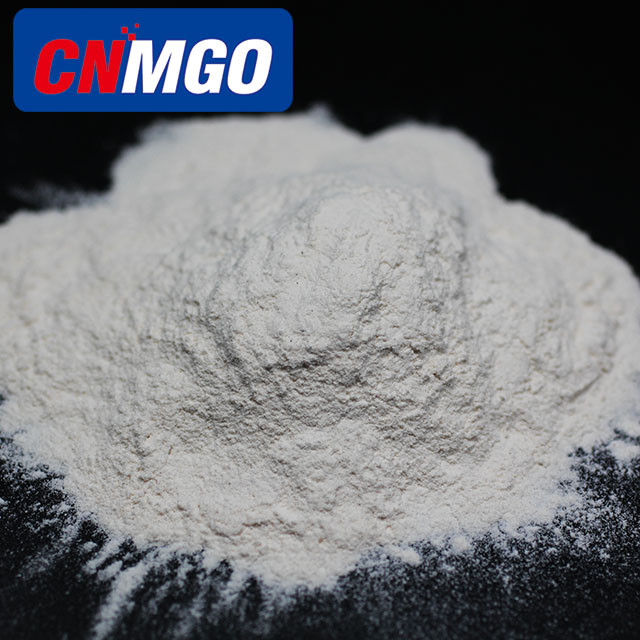
Agricultural light burned magnesia, MgO 65 to 80 percent, a basal soil magnesium source alongside soluble sulphate.
Hard Water, pH and Compatibility
Water chemistry decides whether a clear stock stays clear. Hard bore or canal water carries calcium and bicarbonate; sulphate combines with calcium to form sparingly soluble gypsum, and bicarbonate raises pH and drives carbonate scaling. Before committing a season programme, do a jar test: mix the actual stock concentration with the actual water, let it stand at the real water temperature, and look for cloudiness or sediment after an hour. If scaling appears, acidify the injection water to bring pH toward 5.5 to 6.5 with a compatible acid, or use a sequestrant, and keep magnesium sulphate in a tank separate from calcium and phosphate feeds. pH also affects the product itself only mildly, but it strongly affects emitter deposits and the solubility of any micronutrients sharing the line. Always add acid to water, never water to acid, and dose acids under agitation and with appropriate handling. Where water is both cold and hard, the two problems compound: lower solubility plus higher precipitation risk, so the conservative fix is a weaker stock, sequential injection and a flush of the lines with clean water at the end of every irrigation set.
Drip and Foliar Application Without Clogging Emitters
Undissolved residue is the direct cause of blocked emitters, and prevention is cheaper than cleaning a blocked drip line mid-season. Fit an appropriate filter, typically 120 mesh screen or disc filtration downstream of the injection point, and install a settling or filtering stage on the stock tank outlet so no grit reaches the dosing pump. Inject the magnesium stock into the main line only while water is flowing at full rate, never into a static line, and finish each fertigation with a clean-water flush long enough to clear the laterals. For foliar use in cool weather, dissolve fully in a small volume of warm water first, then dilute to a 1 to 2 percent w/v spray, and apply in the mildest part of the day to avoid scorch on wet, cold leaves. Remember that foliar feeding corrects symptoms rather than rebuilding soil reserves, so in a spring programme it complements, rather than replaces, a properly dissolved drip feed.
MgO and Sulphur Content: Reading the Grade Spec
Read the grade spec before you calculate a dose. Magnesium sulphate monohydrate (kieserite) is a concentrated source: CNMGO supplies it at water-soluble MgO 20, 23 and 25 percent minimum, with sulphur typically in the low twenties on a percent basis, and it carries far more magnesium per tonne than heptahydrate, which is around 16 percent MgO and roughly 13 percent sulphur. That difference changes freight, storage and the mass of product you must dissolve to deliver a target kg of MgO per hectare. When a programme calls for 20 kg of MgO equivalent per hectare, a 25 percent MgO kieserite needs about 80 kg of product, while a 16 percent heptahydrate needs 125 kg, and in cold water the larger mass is exactly what is harder to get into solution. Confirm water-soluble rather than total MgO, check the sulphur figure if sulphur is part of the nutrient plan, and ask for the sieve or granule size on the COA so the dissolution behaviour matches the previous section.

HOLY Perspective
HOLY (CNMGO Group Limited) produces magnesium sulphate monohydrate (kieserite) in powder and granular forms with water-soluble MgO 20, 23 and 25 percent minimum, plus agricultural light burned magnesia for basal magnesium correction, from Dashiqiao in Liaoning to more than 50 countries. Share your winter water temperature, water analysis and target MgO rate per hectare and we will recommend a grade and a stock-solution concentration that stays fully dissolved in your conditions.