Magnesium Oxide in HPAL MHP Precipitation and Selection Guide BY:Cynthia
- Share
- publisher
- 、Saskia
- Issue Time
- Jul 8,2026
Summary
Learn how reactive magnesium oxide controls pH and precipitates nickel and cobalt as MHP in downstream HPAL processing.
Magnesium Oxide in HPAL MHP Precipitation and Selection Guide什么是氧化镁?
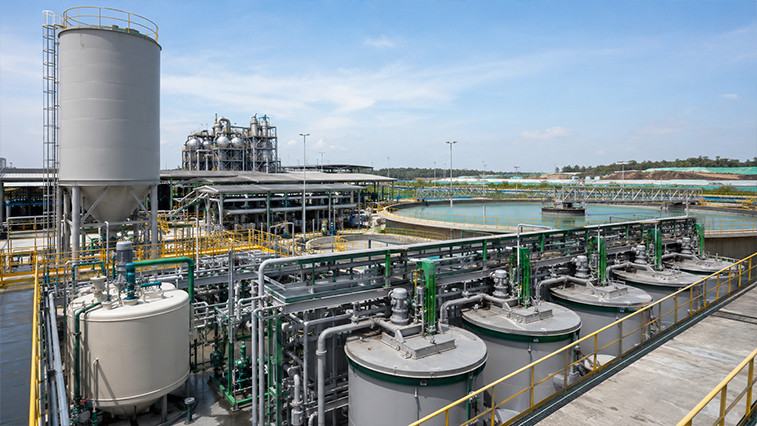
In a nickel laterite HPAL process, magnesium oxide is normally not added to the high-pressure acid-leach autoclave. Its principal role is downstream, after leaching, cooling, solid-liquid separation and impurity removal.
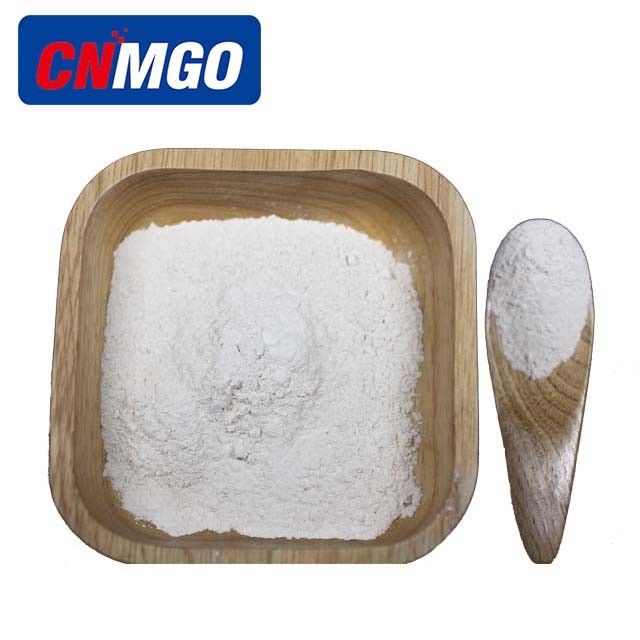
Reactive magnesium oxide is used as a neutralizing and precipitating reagent to convert dissolved nickel and cobalt into Mixed Hydroxide Precipitate, commonly known as MHP.
The performance of Magnesium Oxide for HPAL therefore depends on much more than its total MgO assay. Reactivity, calcination, particle-size distribution, slurry behavior, impurity levels and batch consistency can all affect reagent consumption, nickel and cobalt recovery, manganese and magnesium entrainment, and MHP filtration.
氧化镁具有很高的耐火和绝缘性能。在1000 ℃以上的温度下燃烧后,它可以转变为晶体,当加热到1500-2000 ℃时,它变成死烧氧化镁(氧化镁)或烧结氧化镁。在高
Where Is Magnesium Oxide Used in the HPAL Process?
HPAL uses sulfuric acid at high temperature and pressure—typically around 250°C—to dissolve nickel and cobalt from lateritic ore.
A representative downstream route includes:
1.Ore preparation and slurry production.
2.High-pressure acid leaching followed by flash cooling.
3.Residue washing and solid-liquid separation.
4.Residual-acid neutralization and removal of iron, aluminum, chromium and other impurities.
5.Staged addition of reactive MgO to the purified nickel-cobalt solution.
6.MHP precipitation, thickening, filtration and washing.
7.Scavenging of residual nickel and cobalt followed by manganese and effluent treatment.
Flowsheets vary among projects. Magnesium oxide may participate in selected neutralization or impurity-removal duties, but its best-known application is the precipitation of nickel and cobalt from purified sulfate liquor.
The published Ravensthorpe Nickel Operations flowsheet, for example, uses MgO powder as the precipitant in a train of three reactors before thickening and filtering the MHP product.
How Does Magnesium Oxide Precipitate Nickel and Cobalt?
Reactive MgO consumes acidity and raises the pH of the sulfate liquor, allowing dissolved Ni²⁺ and Co²⁺ to form poorly soluble hydroxide phases.
The simplified chemistry is:
MgO + 2H⁺ → Mg²⁺ + H₂O
Ni²⁺ + 2OH⁻ → Ni(OH)₂↓
Co²⁺ + 2OH⁻ → Co(OH)₂↓
For a sulfate system, the overall reactions may be simplified as:
NiSO₄ + MgO + H₂O → Ni(OH)₂↓ + MgSO₄
CoSO₄ + MgO + H₂O → Co(OH)₂↓ + MgSO₄
Commercial MHP is not necessarily composed only of pure nickel and cobalt hydroxides. Basic sulfates, manganese compounds, magnesium and other co-precipitated impurities may also be present.
Product quality is therefore controlled by liquor composition, pH profile, temperature, residence time, seed recycle, mixing and MgO performance.
Why Is Reactive Magnesium Oxide Used for MHP Precipitation?
More controlled pH development
Compared with a highly soluble strong base such as sodium hydroxide, magnesium oxide must first wet, dissolve and neutralize the acidic liquor.
When MgO slurry is added in stages with adequate mixing, this can provide more gradual pH development and improve control over the selective precipitation of nickel and cobalt relative to manganese and magnesium.
This does not eliminate the need for precise control. MgO overdosing or poor mixing can increase manganese and magnesium contamination, lower the nickel-cobalt grade of the MHP and harm downstream refining performance.
Lower gypsum contamination
Limestone and lime are effective for bulk neutralization and upstream impurity removal. In sulfate liquor, however, calcium can form gypsum, increasing solids volume, scaling and entrainment in the final product.
MgO primarily forms soluble magnesium sulfate after neutralization. Under well-controlled conditions, this can reduce gypsum-related dilution and filtration problems in the final MHP circuit.
Production of a transportable nickel-cobalt intermediate
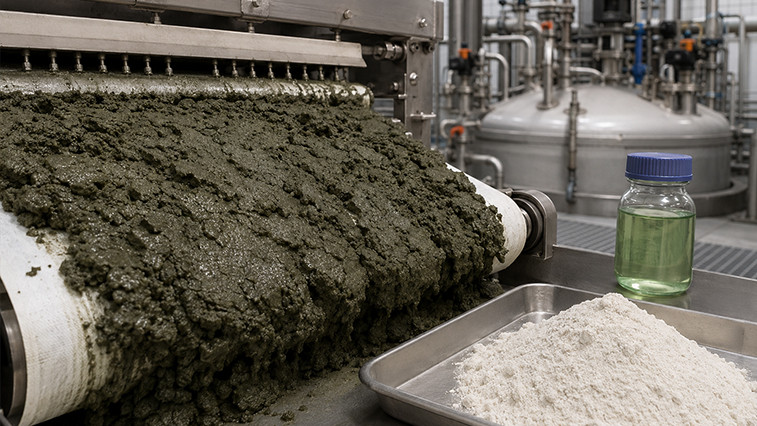
Well-controlled MHP can be thickened, filtered and washed to form a wet nickel-cobalt intermediate suitable for transport to a refinery.
It can then be releached and processed into nickel sulfate, cobalt chemicals or other refined products.
High nickel and cobalt recoveries are achievable with MgO, but recovery and selectivity must be balanced. Some industrial circuits intentionally leave a small percentage of nickel and cobalt in the liquor at the primary MHP stage to limit manganese contamination, recovering the remaining metals in a downstream scavenger circuit.
No pressurized sulfide-gas system
Nickel and cobalt can also be recovered as mixed sulfides. Sulfide precipitation can be selective, but it requires sulfide-reagent generation, storage and stringent gas-safety systems.
An MgO-based MHP route can provide a simpler atmospheric precipitation system and an intermediate that can be readily releached.
Critical Specifications for HPAL-Grade Magnesium Oxide
Reactive MgO—not only total MgO
Total MgO indicates how much magnesium oxide is present but does not show how much alkalinity becomes available within the circuit residence time.
Dead-burned or heavily sintered MgO may have a high assay but react too slowly, leading to poor utilization and unreacted particles in the MHP.
HPAL precipitation circuits normally require light-burned, caustic-calcined or otherwise suitably reactive magnesia.
The supplier and user should agree on an appropriate activity method, such as:
· Citric-acid activity;
· Acetic-acid reaction time;
· Hydration activity;
· Project-specific slurry-neutralization testing.
Results obtained using different activity methods should not be compared directly.
Calcination and reaction rate
Calcination conditions change MgO crystallite size, porosity and surface area.
Under-calcination may leave excessive loss on ignition and variable carbonate phases. Over-calcination can sinter the crystals and reduce reactivity.
The objective is not simply to obtain the highest possible activity. The reaction rate should match the liquor chemistry, reactor volume, operating temperature and available residence time.
Particle-size distribution
Finer MgO generally provides more reactive surface area, but excessively fine powder can increase dust, slurry viscosity and handling difficulty.
Coarse particles may dissolve incompletely, raising MgO consumption and magnesium contamination in the MHP.
D50, D90, screen residue and batch consistency should therefore be reviewed alongside the average particle size.
Chemical impurities
CaO, SiO₂, Fe₂O₃, Al₂O₃, manganese and other impurities may affect selectivity, filtration, scaling and the final MHP specification.
Elevated calcium can increase gypsum formation, while iron and aluminum carried into MHP may complicate downstream releaching and refining.
A qualified HPAL-grade magnesium oxide supplier should provide a complete major-element and impurity profile with a batch-specific COA, rather than quoting only total MgO.
Moisture, loss on ignition and bulk density
These properties affect delivered active content, pneumatic conveying, silo storage, screw feeding and slurry preparation.
In a large continuous HPAL plant, changes in bulk density or flowability may also cause reagent-dosing errors.
Slurry preparation and ageing
MgO is commonly prepared as a pumpable slurry and added in stages.
Slurry solids, make-up-water chemistry, agitation, temperature and storage time can all change effective reactivity.
Published patent and pilot work has reported an ageing effect in stored MgO slurry. Many systems therefore favor freshly prepared slurry instead of long storage.
The allowable holding time should be established for the selected product using actual site water.
Process Variables Controlling MgO Consumption and MHP Quality
Effective impurity removal
Residual iron, aluminum and chromium will precipitate as pH rises, consuming MgO and contaminating MHP.
Iron may also reduce the ease of downstream MHP releaching.
The performance of upstream neutralization and impurity removal is therefore essential when evaluating Magnesium Oxide for HPAL.
Actual demand is higher than pure stoichiometry
The MgO dose must neutralize residual free acid as well as precipitate nickel and cobalt.
It must also account for other acid-consuming ions, incomplete reaction and slurry-ageing effects.
Published laboratory and patent work has reported effective MgO utilization of approximately 70%–90% under particular test conditions. This range should not be copied directly into a commercial design.
Reagent demand must be established through titration, continuous testing and evaluation of the actual process liquor.
Staged pH control
Published MHP studies commonly report final pH conditions within approximately 7.5–9.0.
However, small changes within this range can materially affect:
· Nickel and cobalt recovery;
· Manganese and magnesium co-precipitation;
· MHP nickel-cobalt grade;
· Particle morphology;
· Thickening and filtration.
Rapid single-point addition can create local high-pH zones and fine precipitates.
Industrial circuits commonly use multiple reactors, staged dosing, online pH measurement and adequate mixing to produce a stable precipitation profile.
Residence time, temperature and seed recycle
MgO dissolution and hydroxide crystallization both require time.
Insufficient residence time may leave unreacted MgO in the product, while excessive residence time or alkalinity may increase impurity co-precipitation.
Moderate heating can accelerate the reaction but may also change selectivity and crystal properties.
Recycled MHP seed can promote particle growth and improve thickening and filtration. Final conditions must be established through continuous testing rather than copied from another operation.
Thickening, filtration and washing
Even when precipitation is selective, MHP cake can retain mother liquor containing magnesium, sulfate and soluble salts.
Effective thickening, filtration and washing are required to lower soluble impurities and produce an intermediate suitable for transport and refining.