Kieserite for Oil Palm and Rubber Plantations
- Share
- publisher
- HOLY Magnesium Industry
- Issue Time
- Nov 18,2026
Summary
Why kieserite suits oil palm and rubber: Mg plus S, rates, timing and K interaction.
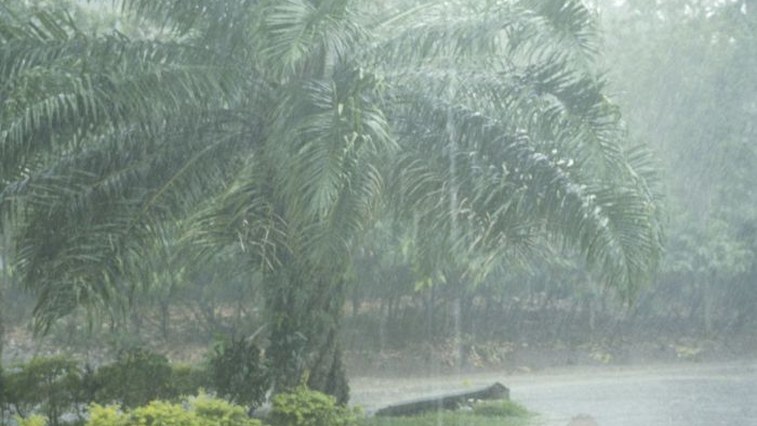
Kieserite for Oil Palm and Rubber Plantations
Oil palm and rubber are the two plantation crops that define large areas of Southeast Asia, and both are heavy, continuous feeders of magnesium and sulphur. Kieserite, the monohydrate form of magnesium sulphate, has become the standard magnesium source on these estates because it supplies both nutrients in one pass, dissolves at a useful rate in tropical rainfall, and is economical to ship per unit of nutrient. Getting the programme right is less about the product than about rate, timing and the balance against potassium, which is where most plantation nutrition plans succeed or fail.
Why Tropical Plantation Soils Run Short
The soils under most oil palm and rubber estates are deeply weathered, acidic and low in cation exchange capacity. High annual rainfall leaches basic cations out of the rooting zone year after year, and the clay fraction that remains holds nutrients weakly. Magnesium is lost faster than calcium on many of these profiles, and sulphur is lost even faster because sulphate is mobile and organic matter mineralises quickly in the heat. On top of that, both crops remove nutrients permanently in the harvested product: every fresh fruit bunch and every litre of latex carries magnesium and sulphur off the estate.
The Dual Role of Magnesium and Sulphur
Magnesium sits at the centre of the chlorophyll molecule and activates the enzymes that drive photosynthesis and carbohydrate transport. In oil palm that translates directly into bunch number and bunch weight; in rubber it affects canopy efficiency and the supply of carbohydrates to the laticifers. Sulphur is a constituent of the amino acids cysteine and methionine and is required for protein synthesis and enzyme function. Sulphur deficiency is increasingly common on estates that have moved to high-analysis, sulphur-free fertilisers, and it quietly caps the response to nitrogen even when nitrogen rates are generous.
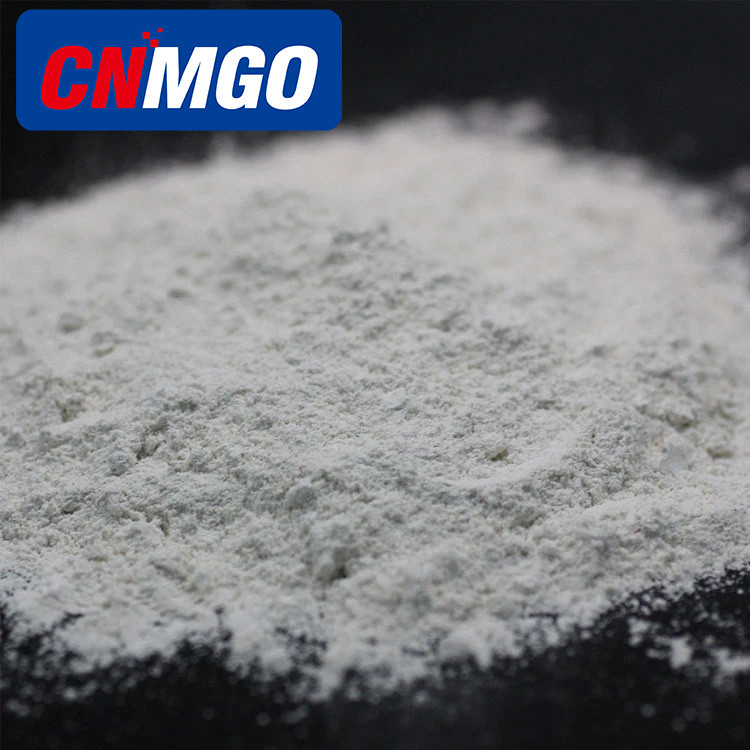
Magnesium sulphate monohydrate (kieserite) powder, supplying both magnesium and sulphur.
Magnesium Demand in Oil Palm
Oil palm has one of the highest magnesium demands of any plantation crop, and the demand rises steeply once palms enter full production. The classic deficiency symptom is orange frond, a chlorosis that begins on the older, outer fronds and progresses inward, weakening the canopy and reducing the photosynthetic area that supports bunch filling. Yield loss appears before the symptoms become obvious, which is why leaf analysis rather than visual inspection should drive the programme. Immature palms need magnesium for canopy establishment; mature palms need it to sustain bunch production, and demand peaks in the years of maximum yield.
Magnesium and Sulphur in Rubber
In rubber, magnesium deficiency appears as interveinal chlorosis on mature leaves and, in severe cases, as necrosis that reduces the working canopy and delays the recovery of bark after tapping. Sulphur plays a less visible but real role in latex biosynthesis and in the protein systems of the bark. On many estates the practical issue is not an acute deficiency but a chronic shortage that depresses latex yield by a few percent year after year, which is worth more across a large estate than most managers assume.
Application Rates, Timing and Method
Kieserite is applied as a basal dressing broadcast by hand or by machine around the palm circle or along the rubber inter-row, ideally ahead of the rainy season so that rainfall moves the nutrients into the rooting zone. Rates depend on palm age, soil type, yield level and the existing potassium regime, and should be calibrated against annual leaf analysis and soil exchangeable magnesium rather than copied from a neighbouring estate. Splitting the annual requirement into two or three applications on sandy or very high-rainfall soils reduces leaching loss considerably.
The monohydrate form is preferred for plantation use for two reasons. It carries more magnesium per tonne than the heptahydrate, which lowers freight, storage and spreading cost per unit of nutrient, and it is less prone to caking in humid store. Where a rapid correction is needed on a small area, a soluble grade applied as a drench works faster, but for estate-scale programmes kieserite applied to the soil is the more practical route.
A programme should be measured rather than assumed. Take leaf samples from a defined frond or leaf position at a consistent time of year, analyse soil for exchangeable magnesium, potassium and calcium, and record results against block, palm age and fertiliser history so that a response or a failure can be traced back to an actual rate. Reassess every one to two years, because a programme that was correct at canopy closure is rarely correct at peak yield.
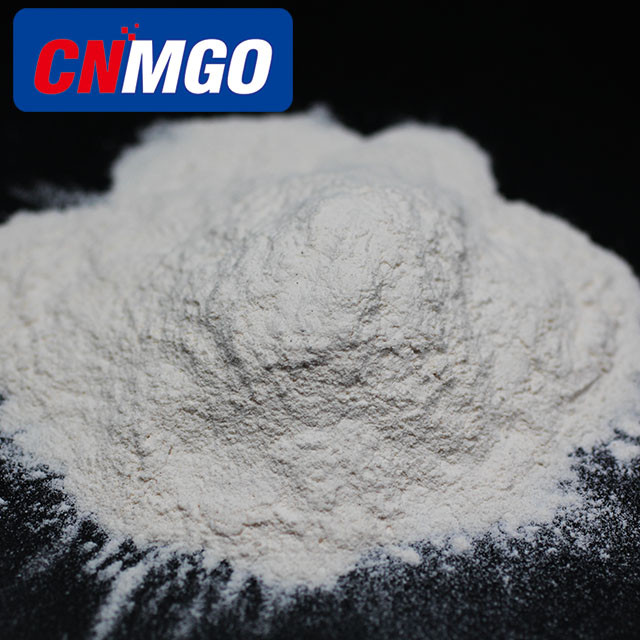
Agricultural light burned magnesia, MgO 65 to 80 percent, used where soil pH correction is also needed.
Interactions With Potassium and Soil Acidity
No magnesium programme works in isolation from potassium. Potassium and magnesium compete for the same uptake sites, and oil palm fertiliser regimes are potassium-heavy, so a high potassium application can induce magnesium deficiency on soil that is not actually short of magnesium. Watch the exchangeable potassium to magnesium ratio in soil tests as carefully as the individual values. Where soil is also strongly acidic, a liming material may be needed alongside the magnesium source; agricultural light burned magnesia supplies magnesium and neutralises acidity at the same time, while kieserite supplies magnesium and sulphur without changing pH, which is the better choice where soil pH is already acceptable.
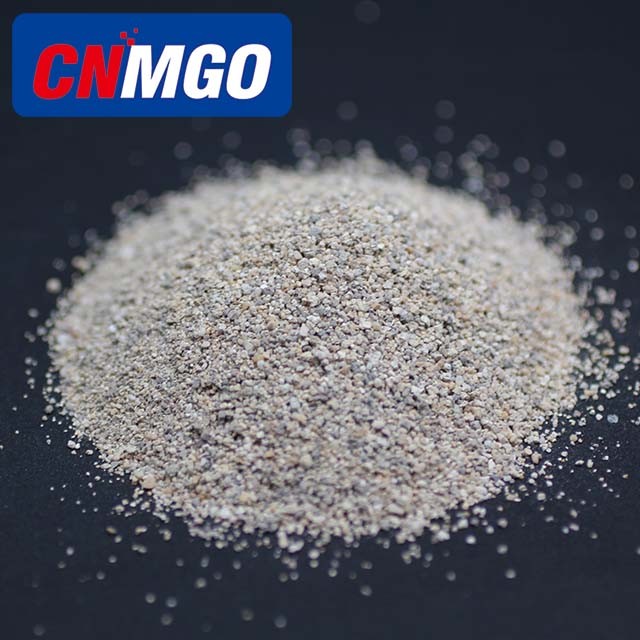
Granular CCM, 0.3 to 2 mm, for mechanical spreading on large plantation blocks.
HOLY Perspective
HOLY (CNMGO Group Limited) supplies magnesium sulphate monohydrate (kieserite) with W. MgO 20, 23 and 25 percent minimum, plus agricultural light burned magnesia, from Dashiqiao in Liaoning to plantation customers in more than 50 countries. Share your crop age, leaf analysis and annual rainfall pattern and we will help size the grade and application split for your blocks.